


The Great Pull-Away: Why Adult Children Are Going "No Contact"


There is a quiet but massive shift happening in family dynamics today. More adult children than ever before are choosing to pull way back—or cut ties entirely—with their parents.
For the older generation, this often feels sudden, cruel, or confusing. They may ask, "What did I do?" But for the adult child, this decision is rarely sudden. It is usually the result of years, sometimes decades, of "death by a thousand cuts." It is not an act of malice; it is often an act of survival.
Why are so many adults engaging in what is now being called "estrangement" or "going no contact"?
It usually boils down to a fundamental mismatch in emotional maturity and the exhaustion of trying to sustain a one-sided relationship.
1. The Exhaustion of "Heavy Lifting"
Many adult children find themselves acting as the emotional engine of the relationship. They make the calls, they carry the conversation, and they plan the visits.
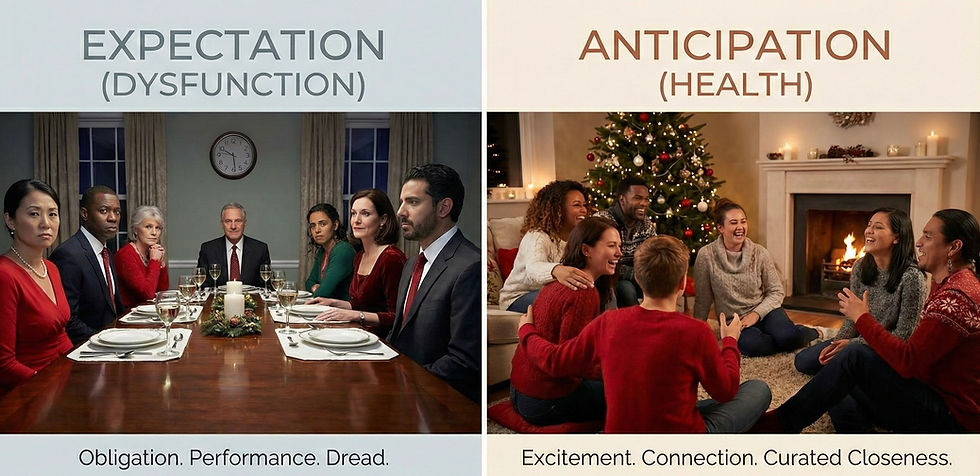
When the parents do engage, the interaction often stays painfully shallow. Grandparents may ask the same rote questions over and over: "How is work? How is school?" There is rarely an inquiry into who the adult child—or the grandchild—actually is. This creates a "surface-level" dynamic where the adult child feels unseen. The parents want the role of a close family (the photos, the holiday gatherings) without the intimacy required to build it. Eventually, the adult child gets tired of carrying the weight of the relationship alone.
2. Emotional Immaturity and Avoidance
A major driver of estrangement is what psychologist Dr. Lindsay Gibson calls "Emotional Immaturity." This includes parents who lack emotional awareness and the ability to self-reflect. In these dynamics, "keeping the peace" is prioritized over genuine connection.
Difficult conversations are avoided at all costs (non-confrontation). If the adult child tries to address a hurt, the parent often cannot handle the discomfort. They may shut down, change the subject, or pretend nothing happened, leaving the underlying issues to fester.
3. The Toolkit of Control: Guilt, Manipulation, and Favoritism
When an adult child attempts to set a boundary—such as asking for a call before visiting or declining a holiday event—emotionally immature parents often view this not as a healthy request, but as a personal attack.
To regain control, they may resort to:
• Guilt Trips: "After all I’ve done for you..." or "I guess I’m just a terrible mother/father."
• Manipulation: Using money, gifts, or access to other family members as leverage.
• Triangulation/Favoritism: Pitting siblings against one another. One child is the "Golden Child" who can do no wrong, while the other is the "Scapegoat" who is blamed for the family tension. This tactic ensures the siblings cannot unite to address the parents' behavior.
4. The "Missing Reasons" and Defensiveness
Perhaps the most frustrating aspect for adult children is the response when they finally try to explain why they are pulling away.
When confronted with the harm they have caused, these parents rarely listen with curiosity. Instead, the defenses go up:
• Rationalizing: "I did the best I could."
• Historical Excuses: "In my day, we didn’t know about 'trauma'. We just got on with it."
• Minimizing: "You're too sensitive," or "That never happened."
If an apology is offered, it is often a non-apology: "I'm sorry if you felt that way." This is not an admission of behavior; it is a dismissal of the child's reality. Crucially, there is no attempt to change the behavior. The harm continues, just with a new layer of gaslighting.
The Decision to Step Back
Adult children are not walking away because they want to hurt their parents. They are walking away because they have realized that their boundaries will be crossed as long as they stay close. They are choosing their own mental health, and the emotional safety of their own children, over the preservation of a dysfunctional family system.
Healing requires the parents to do their own work—to develop emotional awareness and take accountability without excuses. Until then, many adult children are finding that the only way to find peace is to love from a distance.
References & Further Reading
For those interested in exploring the psychology behind these dynamics, the following resources provide excellent frameworks:
• Gibson, L. C. (2015). Adult Children of Emotionally Immature Parents: How to Heal from Distant, Rejecting, or Self-Involved Parents. New Harbinger Publications. (Explores the concept of emotional immaturity and the "externalizer" parent).
• Tawwab, N. G. (2021). Set Boundaries, Find Peace: A Guide to Reclaiming Yourself. TarcherPerigee. (Discusses the necessity of boundaries and how to handle the "pushback" from family).
• Campbell, S. (2020). But It’s Your Family…: Cutting Ties with Toxic Family Members and Loving Yourself in the Aftermath. Morgan James Publishing.
• Pillemer, K. (2020). Fault Lines: Fractured Families and How to Mend Them. Avery. (Sociological research on the prevalence and causes of estrangement).
©Lisa King, LPC

Comments